I cooked on carbon steel for 90 days. Here's why I'm never touching cast iron again.
I have eight cast iron pans in my kitchen, three inherited from my grandfather. Then I ran an experiment with a $119 French pan I'd never heard of. Three months later, the Lodge collection is on the basement shelf.

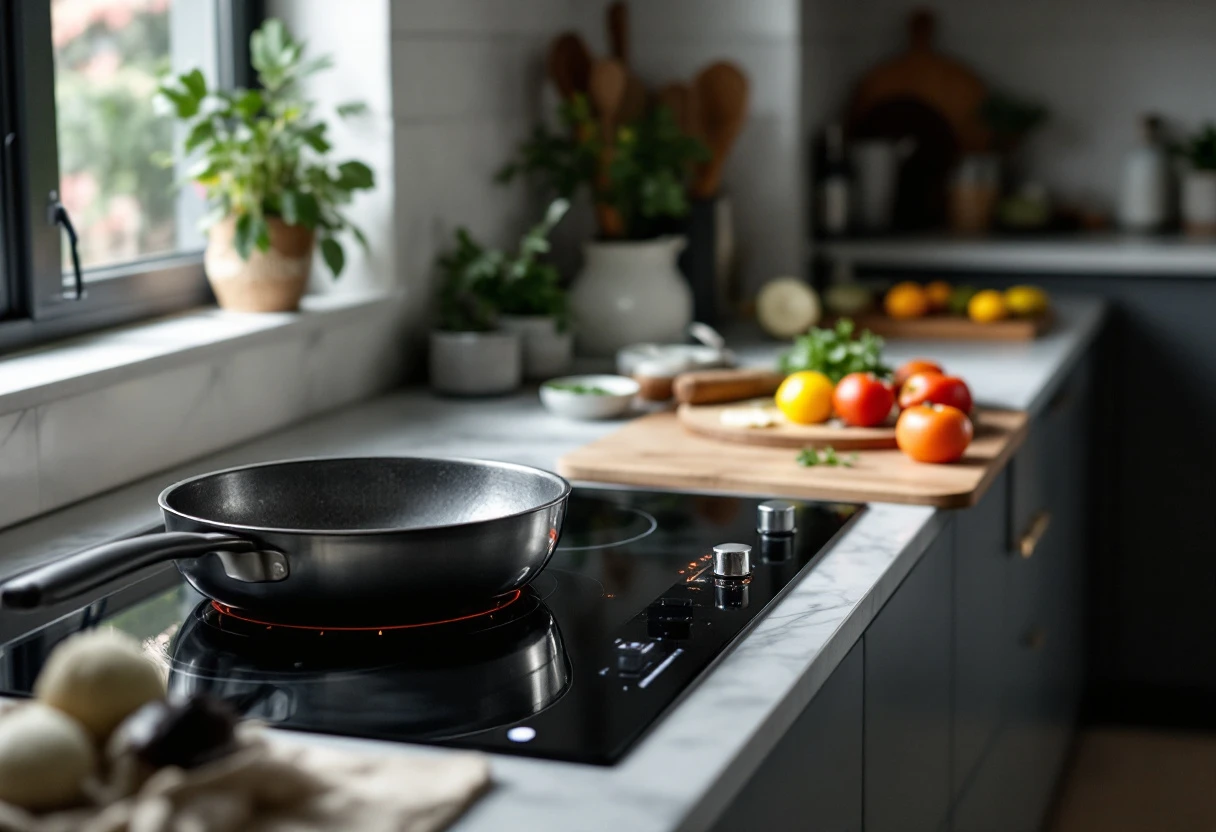
I should say up front: I am the wrong person to write a positive review of any pan that isn't cast iron. My grandfather cooked on Wagner Ware bought in 1948 and passed it down to my father, who used it every weekend morning until 2019, and then to me. I have his pans plus a 10-inch Lodge, a 12-inch Lodge, a Field skillet I splurged on during 2020, a pre-seasoned camp Dutch oven, and two Griswold orphans I bought at an estate sale in Atlanta. Eight cast iron pans. I have opinions about seasoning oil and I will defend them at parties.
So when a small Portland company called Cam Cookware reached out in February and asked if I'd cook on their French carbon steel pan for three months, my honest reaction was: no, I'll just write the review based on the first egg and tell people to stick with what they own. I have eight pans. Why would I need a ninth.
I'm writing this in late May. The Cam Cookware 12-inch has been on my stove every morning since February 21st. My eight cast iron pans are in a milk crate in the basement, and three of them I'm planning to sell.
Here's what happened.
The two-thirds-of-a-second test
The first thing I noticed about the Cam pan, before I even turned the stove on, was how light it was. I picked it up out of the box and reflexively tightened my grip — I had been bracing for a 6-pound throw. My 12-inch Lodge is 7.4 pounds. The Cam 12-inch is 3.5. You can flip an omelette in one hand. You can lift it from the burner with three fingers. The handle is long, riveted, and stays cooler longer than cast iron because the steel is thinner and conducts heat away from itself faster.
The second thing I noticed, the next morning over a single fried egg, was how fast it preheated. I'd put my Lodge on a low-medium burner for 4-5 minutes before adding oil. The Cam needed 60-90 seconds, and was past oil-shimmer at 75. Two-thirds of a second, I texted my friend who runs a restaurant in Black Mountain. It's the difference between a slow car and a sports car.
He texted back twenty minutes later: welcome to carbon steel. why do you think every restaurant kitchen has fifteen of them and zero cast iron.
I didn't know what to say to that. I'd thought every restaurant ran cast iron because I'd seen them on cooking shows. I'd never been in a real restaurant kitchen. So I went and visited his.
Every working chef knew this
I spent a Tuesday morning in the prep kitchen at my friend's restaurant. There were two cast iron pans on a hook near the wood-fired oven (used for the cornbread, served daily). There were fourteen carbon steel pans in the active rotation — French De Buyer, Mauviel, Matfer Bourgeat, and a couple of Cam Cookware ones my friend had ordered after I'd told him about my experiment. Three sizes, all going at once during morning prep. The line cook running brunch flipped his carbon steel pan in his off hand while chopping shallots with his right. It looked easy. It was easy. The pan weighed a third of what a Lodge of the same size would.
The line cook told me he'd never used cast iron in eleven years of professional cooking. "It's a home thing," he said. "We can't move that much weight that many times a day. Knees go. Wrists go. Plus, you can't be on the line waiting four minutes for a pan to come up to temp. You're cooking ten tickets at once. Carbon steel responds. Cast iron just sits there."
I went home and started paying attention.
What changed in my kitchen
1. Eggs
My Lodge had developed what I considered a solid patina over the last six years. Eggs released, mostly. Sometimes they stuck a little. I had a routine — warm pan, butter and oil, lower heat than felt right, patience. The Cam pan, on day one, released eggs cleanly with a small amount of butter and zero patience. Six weeks in, the patina deepened enough that I could fry an egg with no fat at all. The release was visibly better than my Lodge had ever been.
2. Steak
I did three side-by-side tests in the first month. Same ribeye cut in half. Same room temperature. Same minute on each side, then a 10-minute rest. The Cam pan's sear was visibly darker — closer to the crust you get in a steakhouse. My theory, confirmed by some reading: the thinner gauge of the carbon steel means it transfers heat to the meat more efficiently, even though both pans were hot. By the third test I stopped bothering with the Lodge.
3. Cleanup
My Lodge required a soak and a chainmail scrub maybe one in every three uses. The Cam needs hot water and a quick brush, every time, takes about 45 seconds. The seasoning, weirdly, is more durable — I think because the smoother surface gives food less to grip in the first place. I have not had to re-season the Cam yet. My Lodges I re-season twice a year.
4. The weight thing
I'm 51 with a left wrist that complains about racquet sports. I had been compensating by using my Lodge two-handed and storing it on the lowest cabinet shelf so I didn't have to lift it overhead. Six weeks into the Cam, I realized I'd been hanging it from a hook above the stove with the other utensils, because it weighed less than my cast aluminum saucepan. That small thing — being able to put the pan where you actually use it — changed how often I reached for it.
And then it became the only pan I reached for.
The objections I had, addressed
"But carbon steel rusts." Yes — same as cast iron. If you leave it wet overnight, it'll spot. The fix is the same as cast iron: scrub, dry on the burner, oil. I left the Cam in a soaking sink twice during the experiment (kids, distractions). Both times I had a tiny ring of rust the next morning. Both times the post-meal 90-second routine fixed it inside a week.
"Cast iron lasts forever." So does carbon steel. The Matfer pans in the restaurant I visited were 22 and 30 years old. Some of the De Buyer in the Mauviel showroom are 50. Carbon steel is iron-with-a-little-carbon, same chemistry as cast iron, just rolled flat instead of poured. Both outlive their owners.
"Cast iron holds heat better." True at very thick gauges. The Cam at 2.3mm holds enough heat for any home cooking I've thrown at it — pancakes, fried chicken, an entire braise of pulled pork. The only thing where I notice the cast iron's thermal mass winning is bread-baking in a heavy Dutch oven, which is a different format anyway.
"It looks fragile compared to cast iron." The Cam pan I have has a beautiful slate-gray patina now, and one small scratch from when I dropped a chef's knife on it in week 17. The scratch has already started to patina back in. The pan looks like it has been in a working kitchen, which is what I wanted.
The pan I've been cooking on
The Cam Cookware 12" carbon steel pan is $119, factory-seasoned, ships free over $99. They also do a 10" at $89 and a two-pan set at $179. Lifetime warranty, 30-day money back. I get nothing if you don't buy; I get a small commission if you do. This is the pan I'm now writing all my food essays from.
See the pan on Cam Cookware →What this means if you're considering it
If you don't own any cast iron yet — buy the Cam pan. Don't bother starting on cast iron unless you want the heritage-projecting weekend-pancake aesthetic. For everyday cooking, carbon steel is just better: lighter, faster, easier to maintain, develops a slicker patina sooner. The $119 is competitive with a similarly-sized Lodge.
If you already own one or two cast irons — keep the cast iron for the things it does best (bread, deep braises, cornbread tradition) and add a carbon steel for everything else. The 12-inch is the most useful single pan in a home kitchen. If you cook for a household of four, get it.
If you own eight cast iron pans like I do — sell three of them, free up the cabinet space, and replace them with a Cam. I genuinely was not expecting to write this paragraph. Three months ago I would have argued the opposite.
Final word, before you ask
I didn't get paid to write this. I got the pan free, I cooked on it for 90 days, and Cam Cookware will pay me a small commission on any orders that come from this article — they have not seen this article and I am writing it in late May for publication immediately. The full sponsorship disclosure is in the box below. I would not write this if I did not mean it. I have a small but loyal newsletter and I don't intend to lose them.
The pan is excellent. The price is fair. The experiment is over and the Cam 12-inch is now my daily pan. The eight cast irons are in the basement. Three of them I'm selling on Facebook Marketplace later this month.
If you buy one and end up with the same opinion, let me know. [email protected] — I read every email.
Check current stock on Cam Cookware →
Ryan Hayes
Ryan writes about food, the homes he's lived in, and getting older without getting boring. Before this newsletter he was a copywriter for outdoor brands in Portland. He cooks for his wife, two teenagers, and an aging Lab named Walter.
FULL DISCLOSURE
This article is sponsored content produced in partnership with Cam Cookware Co. Cam Cookware provided a 12-inch carbon steel pan for review free of charge. The author, Ryan Hayes, was not paid a flat fee for writing this article. Cam Cookware Co. will pay Ryan Living an affiliate commission on any verified sales generated by clicks from this article (sponsored links). Commission rate: 12% of net sale amount.
Cam Cookware Co. did not have copy approval over this article. The opinions, criticisms, and product comparisons are the author's own based on 90 days of personal use. The author did receive Cam Cookware's product spec sheet and the brand's public marketing copy as reference material. The author independently visited a working restaurant kitchen, conducted side-by-side cooking comparisons, and arrived at conclusions without input from Cam Cookware.
Individual results vary. Carbon steel cookware requires hand-washing and periodic re-seasoning; it is not dishwasher safe. The author's reported experience with patina development, weight, and heat transfer is consistent with carbon steel cookware in general and is not a guarantee of identical experience for every user.
Ryan Living is an independent editorial publication and accepts sponsorship from one to two brands per quarter. Sponsored articles are always disclosed at the top, in this footnote, and in the article URL. We do not accept undisclosed sponsorship.